
Raising Money From Foundations


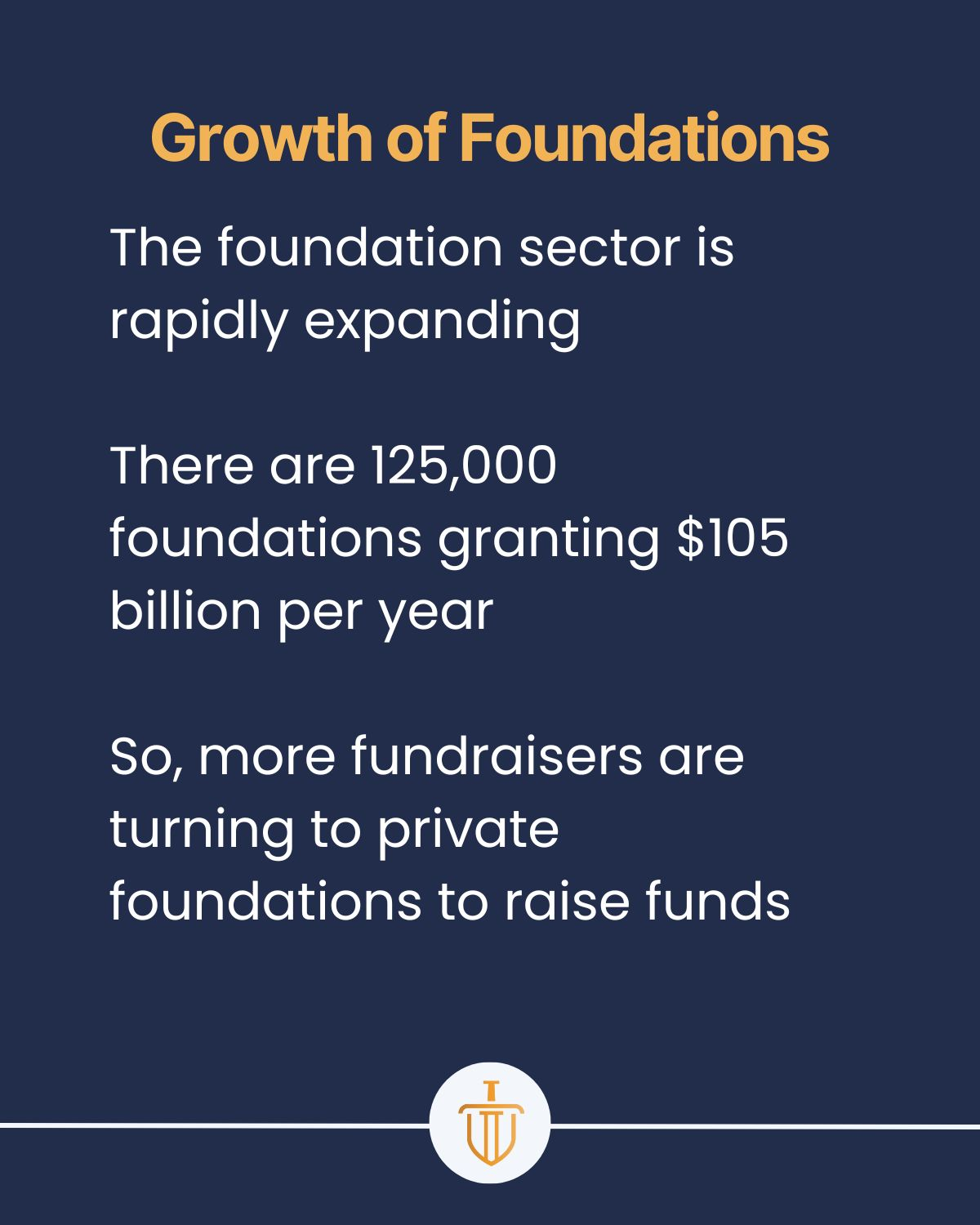
More fundraisers are turning to private foundations to raise funds – and for good reason. As conservative philanthropists grow savvier about donor intent and tax advantages, private foundations are increasingly a preferred vehicle for giving.
The foundation sector is rapidly expanding. There are 125,000 foundations, with $1.6 trillion in assets, granting $105 billion per year (a 19% increase from 2019)
Approaching Foundations is Different Than Individual Philanthropists
With foundations, you’re navigating a structured process with timelines, guidelines, and pre-determined funding priorities. Written proposals, formal reporting, and data-driven examples of impact often mediate the relationship.
Your success depends on aligning your work with their mission and showing you can deliver within their framework.
That makes the upside of pursuing foundation giving:
• Easier to research their giving patterns via public Form 990s
• Gifts are made from a corpus of funds, which makes them more stable year-to-year, unlike individuals whose income and stock portfolios might change
• Higher potential for multi-year commitments, which help your team plan for future programs
• Their public association with you lends credibility to your work
However, be mindful of trade-offs with foundation applications:
• Need for deep research on family background, how they first made wealth, key decision makers, funding priorities, and typical grants.
• Navigating strict eligibility criteria and internal politics, such as political disagreements within a family
• Significant time spent on letters of inquiry, grant applications, and formal reports.
Increasing Your Chance of Success with Foundation Grants
Here’s what you should do to have the best chance of success when pursuing foundation grants:
- Build meaningful relationships with foundation staff before you send an application. Understand what balance of data and storytelling they prefer to receive. Some stick to the facts, while others love pictures of constituents you serve.
- Assign clear ownership of finding and tracking foundation applications. Meticulously track deadlines so you don’t miss an opportunity that only comes around once per quarter.
- Use the right tools to find potential grants, such as Instrumental, Foundation Directory, Grant Station, or Grant Finder.
- Do your research into the family tree, funding priorities, key decision makers, and typical grants.
- Create templates for letters of intent, grant applications, and formal reports. Be as thorough as you can with sections on summary, problems addressed, strategies for solutions, outcomes achieved, program budgets, etc.
Foundations are not easy money. But for organizations willing to invest in the grant-seeking process, they can be a game-changing, steady source of support for your mission.